
|
Summary of Events Under the Green Tent
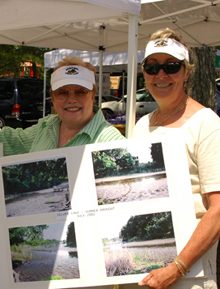 "Don't Dump Down the Storm Drains" was the RBFM tip #1. Save Our Lakes Alliance 3 (SOLA3) provided important information on Rehoboth Beach's three local fresh water lakes. See http://www.sola3.org/help.html for tips on what you can do to keep our precious fresh water lakes in optimum health. Tip #2, “Go Natural on Lawn Care” gave RBFM customers a chance to learn how to maintain a healthy lawn without the excessive use of chemicals. Joe Lieb, branch manager for NaturalLawns of America was under the Green Tent to share his knowledge about the advantages of maintaining a chemical-free lawn. To learn more about doing the right thing for your lawn, see NaturalLawns of America’s web site at http://www.nl-amer.com. “LESS PLASTIC IS FANTASTIC!” was the theme for week three. Market customers were provided information about why it is important to use biodegradable products such as leaf bags, dog waste bags and cat pan liners. They were also given several web sites where they could purchase these products. Other tips on how to use less plastic were provided also. A very simple way of using less plastic is to always carry a reusable non-plastic bag with you when you shop, thus limiting the need for plastic bags. The RBFM sells tote bags that you can use to carry home your purchases. This week, the emphasis was on buying and using energy-efficient light bulbs and there were hand-outs and a variety of compact fluorescent bulbs (CFLs) on display for customers to examine. According to the U.S. Department of Energy, making improvements to your lighting is one of the fastest ways to cut your energy bills since an average household dedicates 11% of its energy budget to lighting. By using new lighting technologies you can reduce by 50% to 75% the lighting energy use in your home. Advances in lighting controls offer further energy savings by reducing the amount of time lights are on but not being used. See: http://www1.eere.energy.gov/consumer/tips/lighting.html for more lighting tips.
Kanicki Heating and Air company was at the market and was busy explaining how their numerous energy-efficient products worked, such as tankless water heaters and pellet stoves and answering the many questions about how to save energy related to heating and cooling your home. According to the U.S. Department of Energy (DOE), the process of heating and cooling your home uses more energy and drains more energy dollars than any other system in your home. DOE states that typically, 45% of your utility bill goes for heating and cooling. Additionally, heating and cooling systems in the U.S. emit 150 million tons of carbon dioxide into the atmosphere each year, adding to global climate change. While water heating is the third largest energy expense, there are ways to reduce your water heating bills: you can use less hot water, turn down the thermostat on your water heater, insulate your water heater or purchase a new, more efficient water heater, such as the tankless heater. If you heat with electricity, have high electric rates, and have an unshaded, south-facing location you might want to consider installing a solar hot water heater. For more tips on saving energy, see www.eere.energy.gov/consumer/tips. What can composting do for the environment? It can: help reduce the quantity of materials for landfill by approximately 20 percent; improve the structure, texture and aeration of your soil; add nutrients and trace elements tht release more slowly; and reduce the demand for chemical fertilizers and mulches and the need for watering. Barbara Glazer provided market customers with general information about composting, how they could start composting at home and how to use the finished compost. She also provided further resources. For more information about composting see http://www.vegweb.com/composting/how-to.shtml.
Our Green Tent volunteers now give out FREE vegetable containers to shoppers. Please use these containers for individual items. Just ask the vendors to fill your container or simply trade in your empty container for a full one. |
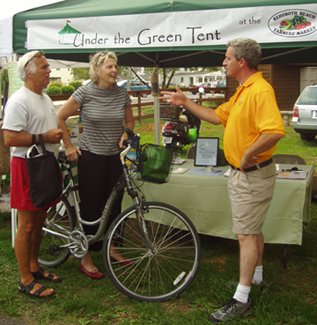
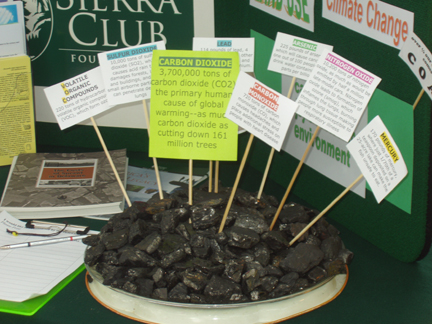 June Satterfield, a representative from the Delaware Sierra Club was busy answering customer questions about how they could help save the environment. Among the projects that the Delaware branch supports are renewable energy and protection of the RedKnot and Horseshoe Crab populations. The branch also has an extensive outreach and education program. The Sierra Club founded in 1892, today has more than 1.3 million supporters nationwide. In Delaware about 1,700 of your friends and neighbors are members of the Delaware branch. The Sierra Club is America's oldest, largest and most influential grassroots environmental organization. For over 100 years it has been instrumental in preserving wilderness, wildlife and nature's most splendid wild places such as Yosemite National Park, Grand Canyon National Park, the Florida Everglades and the Sequoia National Monument. For more information about how you can become a member of the Southern Delaware Group of the Sierra Club of Delaware, please contact Carrie Bennett at c.bennett@de-enviro.net or (302)732-3358.